

Rethinking Racking: Exploring Alternatives to Traditional Pallet Racking to Optimize Warehouse Operations
Automation may be the future—but it’s not always the starting point
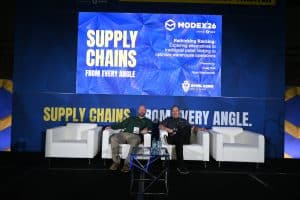 At industry events like MODEX 2026, one message is becoming increasingly clear: while automation continues to evolve, it’s not always the first—or best—step for every operation. In a an educational session at the event, Steel King’s Ryan Wachsmuth and Craig Heil encouraged attendees to take a step back and evaluate a critical question:
“Automation is great… but sometimes… you might want to ask, is it right for me right now?” — Ryan Wachsmuth
For many warehouses, the answer starts not with automation—but with rethinking racking.
The Limits of Traditional Selective Racking
Selective pallet racking is the most widely used system in warehouses today—and for good reason. It offers direct access to every SKU and operational simplicity. But as Wachsmuth pointed out, it comes with tradeoffs:
“There’s not a lot of versatility in it. It creates a lot of aisle space… you lose a lot of floor real estate because you have the aisles and your forklifts are going back and forth.” — Ryan Wachsmuth
In the session’s baseline example—a 60,000-square-foot facility—traditional selective racking delivered just over 5,000 pallet positions. For operations facing growth pressures, that inefficiency can become a bottleneck.
For operations under pressure to grow capacity without expanding footprint, that’s a limitation worth addressing.
Start Simple: Better Use of Vertical and Horizontal Space
Before exploring complex systems, even small adjustments can yield meaningful gains.
Increasing vertical storage is one of the easiest wins:
“Going from four high to five high… will give us a 25% increase, just using the clear height that’s available in the building.” — Craig Heil
From there, modifying rack depth and aisle width unlocks even more capacity:
- Double-deep racking reduces aisle count and can increase storage by over 60%
- Very narrow aisle (VNA) systems shrink aisle widths, pushing gains toward 77%
These approaches demonstrate a key principle: optimizing within your existing footprint often delivers significant ROI without major disruption.
High-Density Racking: Trading Selectivity for Capacity
When operations can sacrifice some selectivity, high-density systems provide dramatic improvements.
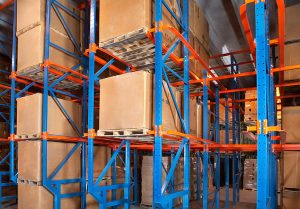
Drive-In / Drive-Through Racking
By allowing forklifts to enter the rack structure, these systems minimize aisles and maximize storage.
“We can eliminate more aisles because we can go more loads deep.” — Craig Heil
The tradeoff? Inventory accessibility. As Wachsmuth explained:
“You have to remove all the pallets in sequence in order to get to a pallet that could be in the back.”
Still, the payoff can be substantial—up to a 92% increase in capacity.
Pushback Racking
Pushback systems bring both density and efficiency by keeping operators at the aisle.
“The pallets are always positioned at the aisle… you’re not driving into the system.” — Craig Heil
This reduces forklift wear and improves productivity:
“You’re looking at less wear and tear… maybe you become so efficient… that employees can be repositioned where you have a bottleneck.” — Ryan Wachsmuth
Pallet Flow Racking
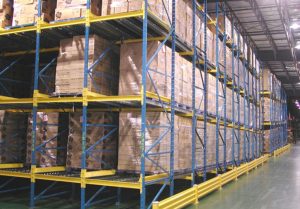
For FIFO environments, pallet flow offers controlled, gravity-fed movement:
“It’s a first-in, first-out system… works really well for perishable items.” — Craig Heil
Wachsmuth emphasized the importance of system control:
“It’s very controlled and slow… anywhere from 30 to 45 feet per minute is a safe operating speed.”
The result is high-density storage with consistent product rotation—ideal for food, beverage, and high-throughput operations.
Bridging the Gap: Semi-Automated Solutions
Not every operation is ready for full automation—but that doesn’t mean standing still.
Pallet Shuttle Systems
These semi-automated solutions dramatically increase storage density while reducing labor demands.
“You can go more or less as deep as you want to go… it’s a very clean, very efficient, very dense storage solution.” — Craig Heil
They also offer flexibility that static systems can’t match:
“We can remote in and reprogram it for you… you don’t have to start over with a whole new system.” — Ryan Wachsmuth
In the session example, shuttle systems nearly tripled capacity compared to selective racking.
When Automation Becomes the Right Move
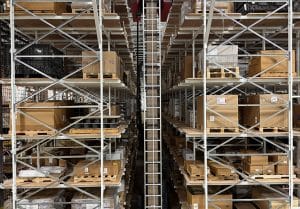
Fully automated systems like AS/RS deliver maximum efficiency and cube utilization—but require the right scale and investment.
“You load the system, and it puts that pallet away… no people involved whatsoever.” — Craig Heil
These systems integrate with WMS platforms and can support “lights-out” operations, but they’re best suited for operations with consistent volume, high throughput, and long-term growth planning.
Don’t Overlook Critical Design Factors
As density increases, so does complexity. The speakers emphasized the importance of early planning:
“Always talk to your insurance company and your local municipality… they’re going to set some of the standards.” — Craig Heil
As storage density increases, so do design complexities. Key considerations include:
- Fire code compliance (flue spaces, in-rack sprinklers)
- Pallet quality and consistency (especially for flow systems)
- Forklift capabilities and limitations
- Ceiling height and clearances
- Throughput requirements and SKU velocity
Engaging these factors early in the design process can prevent costly redesigns later.
“If the metal is already being built… that’s a pricey change… whereas if we just talk up front and design accordingly…” — Ryan Wachsmuth
The Bottom Line: Rethink Before You Rebuild
The biggest takeaway from Steel King’s MODEX session isn’t that one system is better than another—it’s that most warehouses have more potential than they realize.
“We haven’t changed the footprint… we’re just filling in the spots with a different type of product line.” — Ryan Wachsmuth
Before making a major investment in automation, it’s worth evaluating whether smarter racking strategies can deliver the capacity, efficiency, and flexibility your operation needs—right now.
Optimizing your warehouse isn’t about choosing between traditional racking and automation—it’s about understanding the full range of options in between.
Many facilities can unlock significant gains simply by rethinking their racking strategy—leveraging higher density systems, better vertical utilization, or semi-automated solutions tailored to their specific operation.
Ready to rethink your racking? Steel King’s team can help you evaluate your current system and identify the best path forward—whether that’s optimizing what you have or planning for what’s next. If you’re looking for a partner to tackle your warehouse rack design, request a quote from Steel King today.
SOLUTIONS FOR EVERY INDUSTRY.
 Agriculture
 Automotive
 Construction Materials
 Cold Storage
 Ecommerce
 Food & Beverage
 Manufacturing
 Pharma
 Retail
 Wholesale/B2B
 3PL
3PLQuestions? Contact UsContact Us 