


What Warehouse Managers Need to Know About Seismic Rack Design
Whether you’re building a new warehouse, expanding an existing operation, or installing a new racking system, understanding seismic rack design can help you avoid costly mistakes and ensure long-term compliance
When warehouse managers think about pallet rack design, they often focus on storage capacity, throughput, product accessibility, and durability. Those are great specs to measure by, but in many parts of the United States, there’s another critical factor that can have a major impact on rack performance and employee safety: seismic activity.
While earthquakes may seem like a concern reserved only for California, they occur all across the US. and seismic design requirements affect facilities across much of the country. Whether you’re building a new warehouse, expanding an existing operation, or installing a new racking system, understanding seismic rack design can help you avoid costly mistakes and ensure long-term compliance.
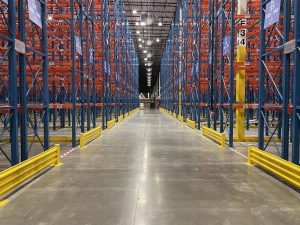
Why Seismic Design Matters for Warehouse Safety
A pallet rack system doesn’t just hold inventory—it becomes part of the building’s structural environment. During a seismic event, the forces exerted on loaded racks can be significant. Without proper engineering, these forces can lead to:
- Rack collapse
- Product loss
- Damage to automation systems
- Employee injuries
- Extended operational downtime
Modern building codes recognize these risks and often require warehouse storage systems to be designed for specific seismic conditions based on location.

Regional Seismic Racking Requirements & Building Codes
Seismic design isn’t a one-size-fits-all proposition. Several factors influence how a racking system must be engineered, including:
- Geographic location
- Building classification
- Rack height
- Inventory weight
- Pallet load distribution
- Importance of the facility’s operations
Warehouse racking in California will face different requirements than a facility in Wisconsin or Texas. However, even regions with relatively low seismic activity may still have design requirements that affect rack specifications.
Understanding the Role of Engineering in Seismic Rack Design
One of the most common misconceptions is that seismic compliance is achieved simply by adding larger anchors to the floor. In reality, seismic design affects nearly every aspect of a rack system, including:
- Upright frame design
- Beam connections
- Bracing configurations
- Base plates
- Anchoring systems
- Load capacities
These components must work together as a complete engineered system.
This is where professional engineering becomes particularly valuable. A properly engineered structural rack system can help ensure compliance with local codes while maintaining operational efficiency.
Why Seismic Separation Matters
One aspect of seismic rack design that often surprises warehouse owners is the requirement for seismic separation—the minimum clearance that must be maintained between pallet racks and surrounding building elements or adjacent rack systems.
During an earthquake, a rack structure is designed to move. That movement helps dissipate seismic energy and reduces the likelihood of catastrophic failure. However, if a rack doesn’t have adequate clearance, it can collide with walls, columns, conveyor systems, automation equipment, or neighboring racks. These impacts can create forces that were never considered in the original engineering calculations, potentially causing structural damage even if the rack itself was properly designed.
Seismic separation requirements are required for Seismic Design Category D and above and are determined through engineering analysis and vary based on factors such as:
- Rack height
- Site-specific ground motion
- Rack configuration
- Inventory loading
- Building construction
Engineers calculate the expected movement of each rack system and specify the required separation distances accordingly.
As noted by structural engineering experts, seismic separation joints are intended to allow independent movement of structures during an earthquake while preventing damaging impacts between adjacent systems. The same principle applies inside the warehouse: allowing racking systems room to move can significantly reduce the risk of damage during a seismic event.
Planning for Separation Early Pays Dividends
Because seismic separation affects warehouse layout, it’s most economical to address during the planning and design phase—not after installation.
Insufficient clearances can reduce storage density, complicate automation layouts, or require expensive modifications if discovered during permitting or inspection. By incorporating seismic separation into the initial warehouse design, companies can optimize storage capacity while maintaining code compliance and protecting long-term operational performance.
This becomes even more critical in automated facilities, where ASRS cranes, shuttle systems, conveyors, and robotic equipment often operate within extremely tight tolerances. Maintaining proper seismic separation helps ensure that rack movement during an earthquake doesn’t damage adjacent equipment or compromise system functionality.
At Steel King, our engineering team evaluates seismic separation requirements as part of the complete rack design process, helping customers balance safety, code compliance, and warehouse efficiency from the very beginning.
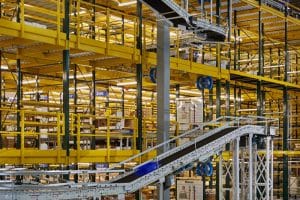 Seismic Considerations for Automated Storage Systems
As warehouses increasingly adopt automation technologies, seismic considerations become even more important.
Automated storage and retrieval systems (AS/RS), shuttle systems, and robotic handling equipment often require tighter tolerances than traditional storage operations. Even minor rack movement can impact system performance.
For automated environments, seismic engineering helps protect:
- Rack structures
- Robotics
- Conveyance systems
- Inventory accuracy
- Overall system uptime
Investing in proper seismic design during the planning phase can help prevent costly disruptions later.
Questions to Ask Before Purchasing Seismic Racking
If your facility may be subject to seismic requirements, consider asking potential rack suppliers:
- Is the system designed to meet current building code requirements?
- Will engineering calculations be provided?
- Are seismic loads considered in published capacities?
- What anchoring requirements apply?
- Can the system accommodate future expansion or automation?
The answers can reveal significant differences between suppliers and rack designs.
Seismic Rack Design as a Business Continuity Strategy
While meeting code requirements is essential, seismic design should also be viewed as a business continuity strategy.
A well-engineered rack system can help:
- Reduce operational risk
- Protect inventory
- Support employee safety
- Minimize downtime
- Extend system lifespan
The goal isn’t simply to survive an earthquake. It’s to maintain the resilience of your operation when unexpected events occur.
Engineering Matters
At Steel King, engineering is at the core of every storage solution we design. Our team works closely with customers, architects, integrators, and engineers to ensure rack systems are designed for the specific demands of each facility—including seismic considerations where required.
Because when it comes to protecting your operation, strength starts long before the first pallet is stored. Contact a Steel King expert — we’ll help you engineer a system that meets code requirements and gives you peace of mind.
For more warehouse design insights and engineered storage solutions, visit Steel King Resources Blog.
SOLUTIONS FOR EVERY INDUSTRY.
 Agriculture
 Automotive
 Construction Materials
 Cold Storage
 Ecommerce
 Food & Beverage
 Manufacturing
 Pharma
 Retail
 Wholesale/B2B
 3PL
3PLQuestions? Contact UsContact Us 