


Warehouse Expansion vs. High-Density Storage Systems: Which Delivers Better ROI?
Before You Add Square Footage, Consider Your Existing Space
When a warehouse starts running out of storage capacity, many organizations immediately begin discussing expansion.
Adding square footage may seem like the obvious solution. But before committing to a building addition, facility relocation, or new distribution center, it’s worth asking a simple question:
Are You Fully Utilizing Your Existing Warehouse Space?
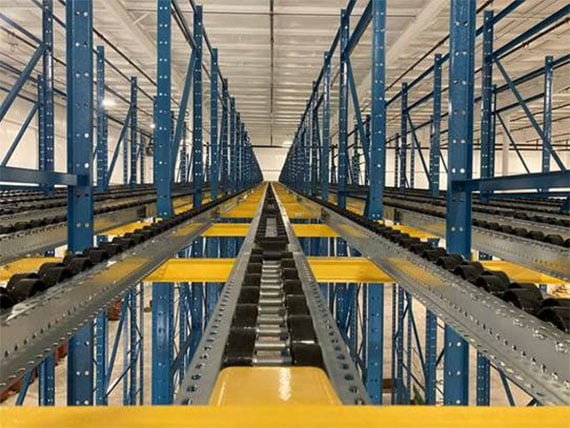 In many cases, the answer is no.
Today’s high-density storage systems can significantly increase storage capacity within an existing footprint, often delivering a faster return on investment than building expansion.
Understanding The Rising Cost of Warehouse Space
Expanding a facility involves far more than construction costs. Organizations must also account for:
- Site preparation
- Permitting
- Utilities
- Additional lighting and HVAC
- Property taxes
- Maintenance expenses
- Increased travel distances for employees and equipment
These costs continue long after the project is completed.
For many operations, expansion can become one of the largest capital expenditures the business undertakes.
The Alternative: High-Density Storage Systems
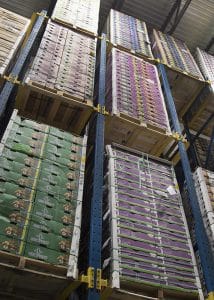 High-density storage systems are designed to maximize the cubic volume already available inside a facility.
Depending on inventory profiles and operational requirements, options may include:
- Pushback rack
- Pallet flow systems
- Drive-in rack
- Drive-through rack
- Mobile storage systems
- Automated storage solutions
These systems can often increase pallet positions without requiring additional building space.
Wht Warehouse Storage Density Is About More Than Capacity
The discussion shouldn’t focus solely on the number of pallets stored. Increasing storage density can also improve:
- Inventory accessibility
- Product flow
- Space utilization
- Warehouse organization
- Future automation readiness
The right solution depends on the operation’s throughput requirements, SKU count, and inventory characteristics.
See this previous Steel King blog on Rethinking Racking for more information on getting the most out of the vertical and horizontal space in your facility before thinking about expansion.
When Warehouse Expansion Makes Sense
There are situations where warehouse expansion is the right decision. Examples include:
- Significant increases in production volume
- New product lines requiring additional processes
- Added manufacturing operations
- Increased shipping and receiving requirements
- Long-term growth projections that exceed available cubic space
In these cases, additional square footage may be unavoidable.
However, expansion should typically occur after existing storage opportunities have been fully evaluated.
When High-Density Storage Delivers Better ROI
For many facilities, higher-density storage provides a compelling alternative because:
- Lower Capital Investment: Storage system upgrades generally cost significantly less than building additions.
- Faster Implementation: New rack systems can often be installed in weeks rather than months.
- Improved Space Utilization: Facilities may gain substantial capacity without expanding their footprint.
- Reduced Operating Costs: Maintaining a smaller building footprint can help control ongoing expenses.
- Better Automation Compatibility: Many modern storage systems are designed to support future automation initiatives.
Evaluating the True Return on Investment (ROI)
The best solution isn’t always the one that creates the most pallet positions. Instead, organizations should evaluate:
- Cost per pallet position
- Labor efficiency
- Throughput improvements
- Inventory accessibility
- Future scalability
- Maintenance requirements
Looking at the entire operational picture often reveals opportunities that aren’t obvious when focusing solely on building size.
Start With a Warehouse Storage Assessment
Before committing to an expansion project, many organizations benefit from a detailed storage assessment.
A thorough evaluation can identify:
- Underutilized vertical space
- Inefficient aisle layouts
- Opportunities for higher-density storage
- Potential automation applications
- Future growth strategies
Sometimes the most cost-effective warehouse expansion happens inside the walls you already own.
Choosing the Right Storage Investment Strategy
Every operation is different. The right solution depends on inventory profiles, growth projections, throughput requirements, and budget considerations.
At Steel King, we help customers evaluate both current and future needs to determine the storage strategy that delivers the greatest long-term value.
Because maximizing warehouse performance isn’t about building bigger—it’s about building smarter. Contact a Steel King expert — we’ll work with you to get the most out of your operation and engineer a system to optimize your storage needs.
For more warehouse design insights and engineered storage solutions, visit Steel King Resources Blog.
SOLUTIONS FOR EVERY INDUSTRY.
 Agriculture
 Automotive
 Construction Materials
 Cold Storage
 Ecommerce
 Food & Beverage
 Manufacturing
 Pharma
 Retail
 Wholesale/B2B
 3PL
3PLQuestions? Contact UsContact Us 